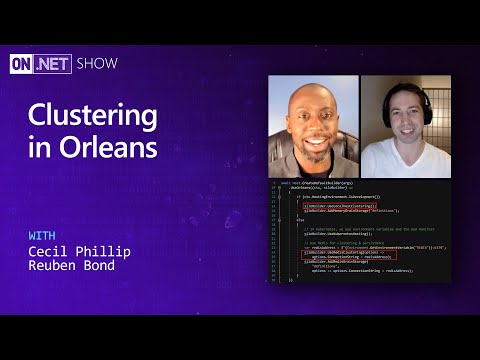
Reuben Bond explains how clustering works inside Microsoft Orleans. Covers how application instances discover each other through a shared membership table (Redis, Azure Table Storage, Cosmos DB), health monitoring via ping/pong probes arranged on a consistent hash ring, the voting mechanism that declares unresponsive nodes as down, handling the distinction between crashed and slow nodes, heterogeneous clusters with different grain types, and indirect probing strategies inspired by the Lifeguard research paper.
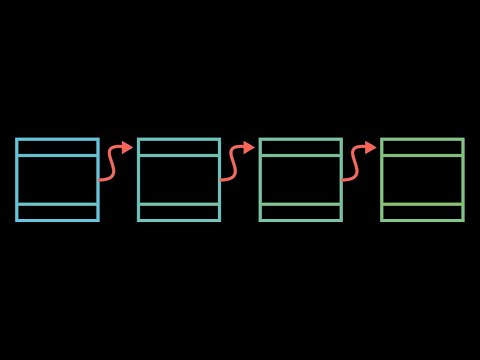
A step-by-step explanation of Bitcoin's underlying mechanics, from communal ledgers and digital signatures to proof-of-work and decentralized consensus. Explores how cryptographic hash functions, mining, and blockchain architecture create a trustless system for digital currency without central authority.
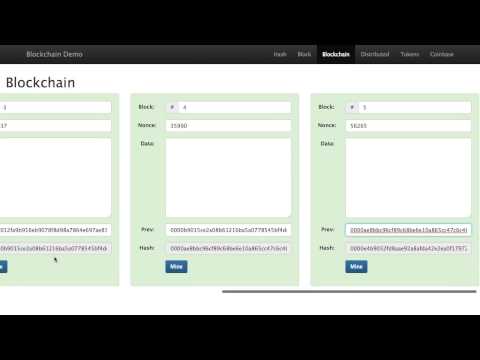
An interactive visual walkthrough of blockchain fundamentals: SHA-256 hashing, block structure, mining process, chain immutability, and distributed consensus. Demonstrates how blocks link together, why tampering breaks the chain, and how coinbase transactions enable digital currency without central authority.
Demonstrates how public/private key cryptography secures blockchain transactions. Shows how private keys sign transactions, public keys verify signatures, and why miners can't forge transactions even when re-mining blocks. Explains how addresses are created without central authority.
Mark Russinovich and Scott Hanselmann examine critical LLM security challenges including hallucinations, prompt injection, and jailbreaks. Drawing from Microsoft's experience red teaming 100+ AI products, he discusses defense-in-depth strategies for securing production AI systems.